
Core Gameplay Mechanics
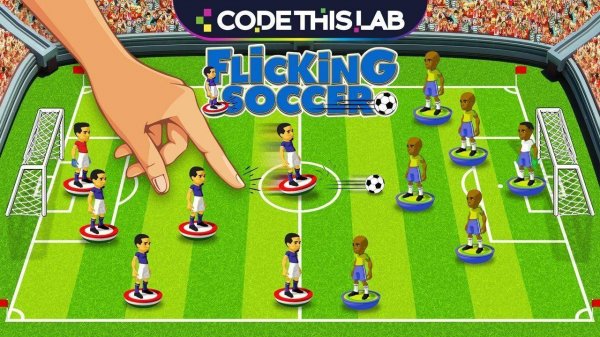
The central action in Tabletop Soccer Flick Challenge revolves around a single intuitive gesture: clicking or tapping the ball, dragging to set your aim, and releasing to flick it toward the goal. This straightforward input method means newcomers can start playing within seconds. However, mastering the precise angle and power behind each flick requires practice and patience. The game rewards players who can consistently place their shots with accuracy rather than relying on raw force. Defensive play follows a similar principle, as you position your on-field players to intercept incoming shots. Each match becomes a test of fine motor control and strategic anticipation.
Match Structure & Pace
Each game is divided into timed periods, with the objective being to score more goals than your opponent before time runs out. The pace is deliberately brisk, with matches typically lasting just a few minutes. This design encourages quick sessions that fit into short breaks or waiting periods. The timer adds a layer of tension, as players must balance careful aim with the need to act swiftly. There is no complicated rulebook to learn; the focus stays on the back-and-forth action of attacking and defending. This streamlined approach keeps the experience accessible while still offering room for skill growth.
Visual Style & Atmosphere
The game adopts a bright, clean visual aesthetic that mirrors the look of a physical tabletop set. The playing surface is rendered with a textured green field, and the player figures are simplified into colorful, cheerful designs. This art style avoids clutter, making it easy to track the ball and your players during fast moments. The overall presentation feels light and welcoming, suitable for players of all ages. Background elements stay minimal to keep attention on the match, and the color palette uses soft tones that are easy on the eyes during extended play sessions.
Team Selection & Variety
Before each match, players can choose from a selection of teams. While the specific attributes of each team are not detailed in the game description, the option to switch teams adds a layer of variety to the experience. Different teams may feature distinct uniform colors or slight differences in player layout, which can influence how you approach offense and defense. This choice allows players to find a team that matches their preferred style or simply adds visual variety across multiple play sessions. The selection process is quick and does not interrupt the flow of the game.
Play Modes & Social Options
Tabletop Soccer Flick Challenge offers two primary ways to play. The single-player mode pits you against a computer-controlled opponent, providing a consistent challenge for practicing your skills. For a more interactive experience, a local multiplayer option lets two players take turns on the same device. This mode is well-suited for family gatherings or friendly competitions. The AI opponent adjusts its defensive positioning based on your actions, creating a responsive challenge that grows with your ability. Both modes use the same core mechanics, so skills learned in one transfer directly to the other.
Skill Development & Progression
Improvement in this game comes from refining two key areas: shot placement and defensive positioning. Beginners may start by focusing on simply getting the ball on target, but experienced players learn to curve shots around defenders or use the edges of the goal for better angles. Defensively, reading the opponent's aim and moving your players into likely paths becomes a learned instinct. The game does not include a formal progression system like levels or unlocks, so the primary reward is seeing your own performance improve over time. This self-driven progression appeals to players who enjoy mastering a simple mechanic through repetition and observation.






Comments
0 comments