
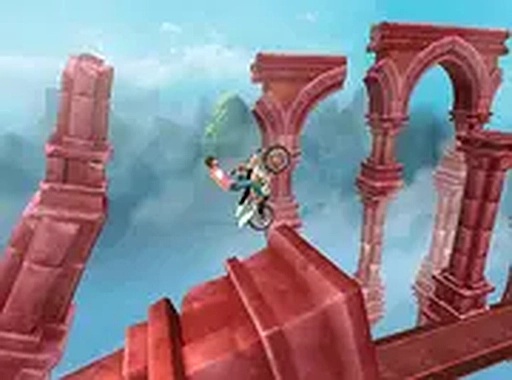
Course Design and Atmosphere
Each track in Track Speed Motorcycle Challenge presents a distinct set of challenges. Courses feature ramps that launch your bike into the air, circular loops that test your momentum, and other dynamic elements that require precise control. The visual style is bright and straightforward, keeping the focus on the action without unnecessary distractions. As you progress, new track layouts introduce fresh combinations of obstacles, ensuring that no two runs feel exactly the same.
Vehicle Selection and Upgrades
Players begin with a single motorcycle, but the garage holds several other machines waiting to be unlocked. Each bike offers different handling characteristics, affecting how it responds to turns, jumps, and landings. Coins collected during races are the key to expanding your collection. Choosing the right motorcycle for a particular track can make a noticeable difference, especially on courses with tight corners or long sequences of aerial maneuvers.
Coin Economy and Progression
The coin system forms the backbone of progression. Coins appear along the track, often placed near obstacles or in slightly risky positions that reward careful driving. Successfully completing a stage also grants a coin bonus. This currency lets you purchase new motorcycles, each with its own strengths. The pace of earning is steady, allowing players to unlock bikes at a comfortable rate without feeling pressured to replay the same track repeatedly.
Control and Responsiveness
The game is optimized for keyboard input, with responsive controls that let you accelerate, brake, and lean the bike. Maintaining balance during jumps and loops is essential, as landing poorly can slow you down or cause a crash. The controls are intuitive enough for newcomers to pick up quickly, yet they offer enough nuance for experienced players to refine their technique. A full-screen mode is available to minimize visual clutter and improve concentration.
Mastering the Tracks
Success depends on learning each course's rhythm. Repeating a track helps you memorize where obstacles appear and how to approach them. Timing your speed adjustments before a loop or jump can mean the difference between a smooth landing and a tumble. Patience and practice are the main tools for improvement. The game rewards players who take the time to understand each track's flow rather than simply rushing through.








Comments
0 comments